
Why Do Employees Feel Guilty Taking Breaks at Work?
And What Can Employers Do About It

Your lunch break is more than just time to eat.
Stepping away from your desk, even for 10–15 minutes, can help you reset, move your body and return to work feeling refreshed.
Taking a break shouldn't feel like breaking the rules. Yet in many workplaces, stepping away from your desk can still come with an uncomfortable sense of guilt.
I remember working in an office where cigarette breaks were a normal part of the day. Colleagues and managers, would regularly step outside for a smoke, a chat and a few minutes away from their desks many times during a working day.
Nobody seemed to question it.
However taking a short walk around the block to get some fresh air wasn't received in quite the same way.
I remember thinking: Why is stepping outside for a cigarette considered acceptable, but stepping outside for your wellbeing somehow feels like you're bunking off?
It's a question that has stayed with me.
And after years of working with organisations through Corporate Yoga Australia, I believe it's a conversation we need to have more often.
Because taking a break isn't a sign that someone isn't working hard enough. It's a normal, healthy part of the working day.
Why do we feel guilty about taking breaks?
For many employees, the hesitation isn't about whether they need a break. It's about how taking one might be perceived.
Will my manager think I'm not busy enough?
Should I finish just one more email before stepping away?
Will my colleagues think I’m not working as hard as I could be?
Workplace culture sends powerful messages about what's acceptable, often without anyone saying a word.
If managers regularly work through lunch, respond to emails while eating and rarely leave their desks, employees may feel pressure to do the same.
Over time, being visibly busy can become confused with being productive.
The result? People remain at their desks even when they're tired, mentally overloaded or physically uncomfortable.
What does the research tell us?
Research published by Staffordshire University in 2020 explored the psychological and social influences on office workers taking breaks. The researchers found that employees' decisions were strongly influenced by workplace relationships, workload and the behaviour of colleagues and managers.
Some participants experienced guilt or anxiety about taking breaks, while others felt that work demands simply took priority.
Importantly, the researchers highlighted how encouragement from managers and colleagues could help people feel more comfortable taking time away from work. In other words, the people around us can influence whether we feel permitted to pause.
The science behind taking a short break
There is also evidence that short breaks can support our wellbeing.
A 2022 systematic review and meta-analysis published in PLOS ONE examined 22 independent study samples involving 2,335 participants.
The researchers found that micro-breaks (short pauses of up to 10 minutes) were associated with small but statistically significant improvements in energy and reductions in fatigue.
A short walk, a few gentle stretches, some fresh air or a moment of mindful breathing can provide a welcome change from sustained concentration and sitting.
When did taking a break become something we have to earn?
Somewhere along the way, many workplaces have developed an unspoken expectation that we should be constantly available.
We sit through back-to-back meetings.
We eat lunch while answering emails.
We move from one task to another without giving ourselves a moment to reset.
And when we finally step away, we feel as though we should justify it.
But imagine if we viewed wellbeing breaks not as an indulgence or as a reward for finishing everything on the to-do list but as a way to reboot ourselves and come back feeling both mentally and physically better.
That small shift in thinking could make a meaningful difference.
Five ways employers can create a healthier break culture
1. Lead by example
Employees notice what their managers do far more than what appears in a wellbeing policy.
If leaders never take breaks, their teams may interpret that behaviour as the expected standard.
A simple comment such as “I'm heading out for a short walk before my next meeting” can help make breaks feel normal.
2. Make breaks part of the working day
Rather than treating wellbeing as something employees need to squeeze in around an already overloaded schedule, make space for it.
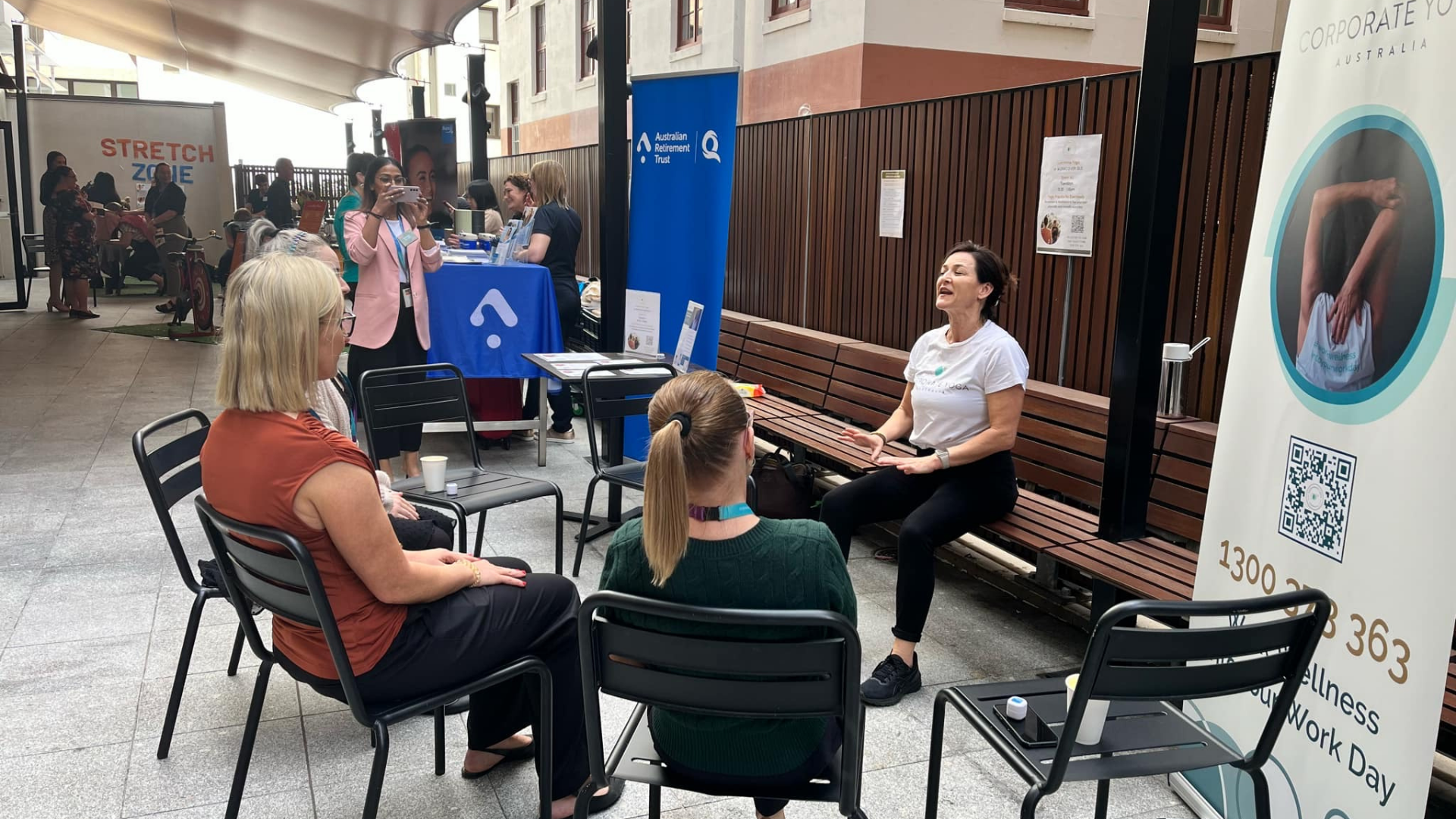
Consider introducing short movement breaks between long meetings, lunchtime yoga or Pilates classes, a five-minute breathing practice during the afternoon or a walking meeting.
The goal is to make wellbeing accessible, practical and part of everyday working life.
3. Address the workload, not just the behaviour
Encouraging employees to take breaks is a positive step, but it won't achieve much if workloads make stepping away unrealistic.
If people regularly skip lunch because they feel overwhelmed, it's worth asking why.
Are meetings scheduled without gaps?
Are deadlines realistic?
Do employees feel they must always be available?
Creating a healthier break culture means considering the working conditions that either support or prevent recovery.
4. Offer different ways to reset
Not everyone wants to spend their break in the same way.
Some people enjoy a walk outside. Others prefer quiet time, stretching, meditation or a chat with colleagues.
The key is giving people choice without creating another obligation.
5. Remove the guilt
Perhaps the most important change is also the simplest. Let employees know that taking reasonable breaks is encouraged.
Celebrate healthy working habits rather than long hours and constant availability.
And remember that a workplace wellbeing initiative is most effective when the culture genuinely supports participation.
There's little value in offering a lunchtime yoga class if employees feel uncomfortable leaving their desks to attend it.
A final thought
I often think back to those cigarette breaks and my short walk around the block.
It wasn't really about smoking or walking. It was about what the workplace considered acceptable.
And perhaps that's where change needs to begin.
What if we stopped judging people by how long they stay at their desks and started recognising the value of giving them space to recharge?
Whether it's a proper lunch break, a walk outside, a few minutes of stretching or joining a workplace yoga class, taking time to pause should be a normal part of the working day.
Because looking after ourselves shouldn't be something we feel guilty about.
Ready to make wellbeing part of your workplace culture?
At Corporate Yoga Australia, we help organisations bring wellbeing into the working day through tailored workplace yoga, Pilates, meditation, breathwork, mindfulness and wellbeing programs.
From regular lunchtime classes to one-off wellbeing activations and online sessions, our programs make it easier for employees to pause, move and recharge.
We help make taking a wellbeing break something employees look forward to.. not something they feel guilty about!
Research and further reading
Oliver, M., Rodham, K., Taylor, J., & McIver, C. (2021). Understanding the psychological and social influences on office workers taking breaks; a thematic analysis. Psychology & Health. Read the research.
Albulescu, P., et al. (2022). “Give me a break!” A systematic review and meta-analysis on the efficacy of micro-breaks for increasing well-being and performance. PLOS ONE. Read the study.
World Health Organization (2022). WHO Guidelines on Mental Health at Work. Explore the guidelines.
