
Why Your Wellbeing Program Isn't Working (And What To Do Instead)
A Guide for HR Leaders Introducing Workplace Wellbeing Without the Resistance
Supporting employee wellbeing has never been more important, yet many organisations still face the same challenge, how do you encourage people to engage when they're already stretched for time?
For many employees, the busiest moments of the day are when wellbeing is needed most. Between back-to-back meetings, tight deadlines and constant notifications, it can feel impossible to pause, even for a few minutes.
Traditional wellbeing initiatives often ask employees to find extra time before work, after work or during lunch breaks that rarely happen. While these programs have value, they don't always meet people where they are.
The most effective workplace wellbeing strategies aren't about adding another task to the day. They're about making wellbeing accessible, practical and easy to integrate into the flow of work—supporting employees in the moments they need it most.
The Nervous System Gap: Why Most Wellbeing Programs Miss the Mark
When we look at why wellbeing programs fail to gain traction, the issue isn’t motivation: it’s timing and accessibility.
Stress doesn’t wait for scheduled sessions.
It surfaces in the flow of the workday, during tense meetings, performance reviews, and high pressure moments where the nervous system moves into fight, flight, or freeze.
And yet, most programs are designed outside those moments. Optional lunchtime classes, after-work workshops, or digital tools tucked behind a login screen. Support exists, but it’s not available when the body actually needs it.
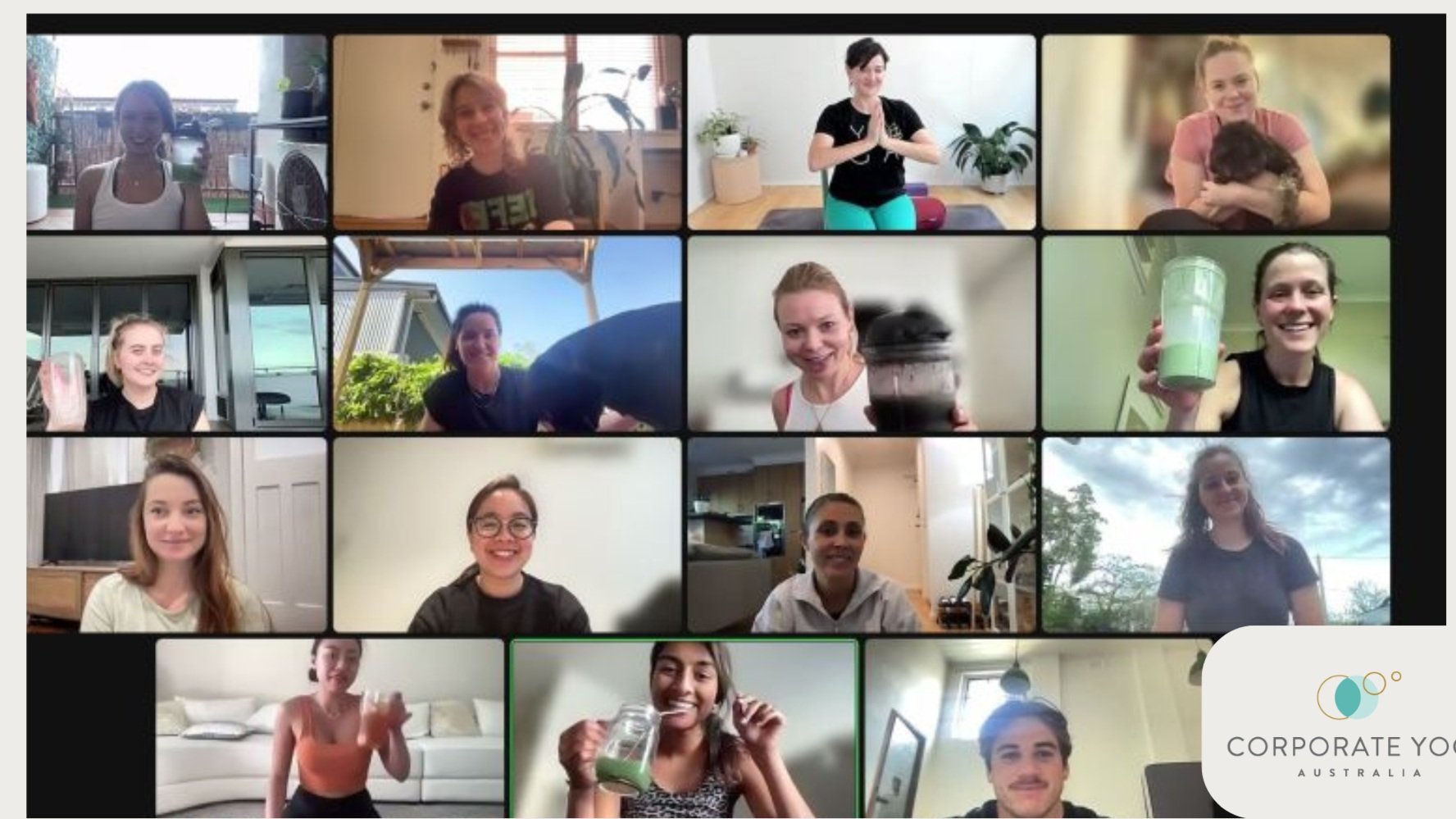
How can you add wellbeing to your workday?
Why Traditional Wellbeing Programs Don't Stick
Think about your current offerings. Do you have these?
Mental health apps → Downloaded but rarely opened
Gym memberships → Swiped once in January, gathering dust by March
EAP services → Available but stigmatized
Wellness challenges → Initial excitement, then crickets
These aren't bad initiatives. But here's why they fail:
They all require employees to find time around work to prioritise wellbeing.
And when your team is already depleted, asking them to add one more thing, even something good for them, becomes just another stressor.
It's like telling someone who's drowning: "There's a life raft on the shore. You just need to swim over and grab it."
They can't. They're already struggling to stay afloat.
What Actually Works: Meeting People Where They Are
"A few weeks ago, we delivered a workplace wellbeing session at a conference.
Three Board members attendedd. None had tried yoga or meditation before, and if we're honest, they probably weren't looking forward to it.
Polite but resistant. Already planning their "I gave it a shot" exit story.
Eight minutes in, something shifted.
You could see it physically: shoulders dropping, breathing deepening, that visible moment when tension releases.
By the end of the session, othe feedback:
"We had 3 Board members who have never tried yoga or meditation before, who were astounded at how well they felt after 1 session and are now considering adding yoga/meditation into their lives! ."
What changed? They felt the difference. And once you feel what it's like to reset your nervous system in real-time, you can't un-know it.
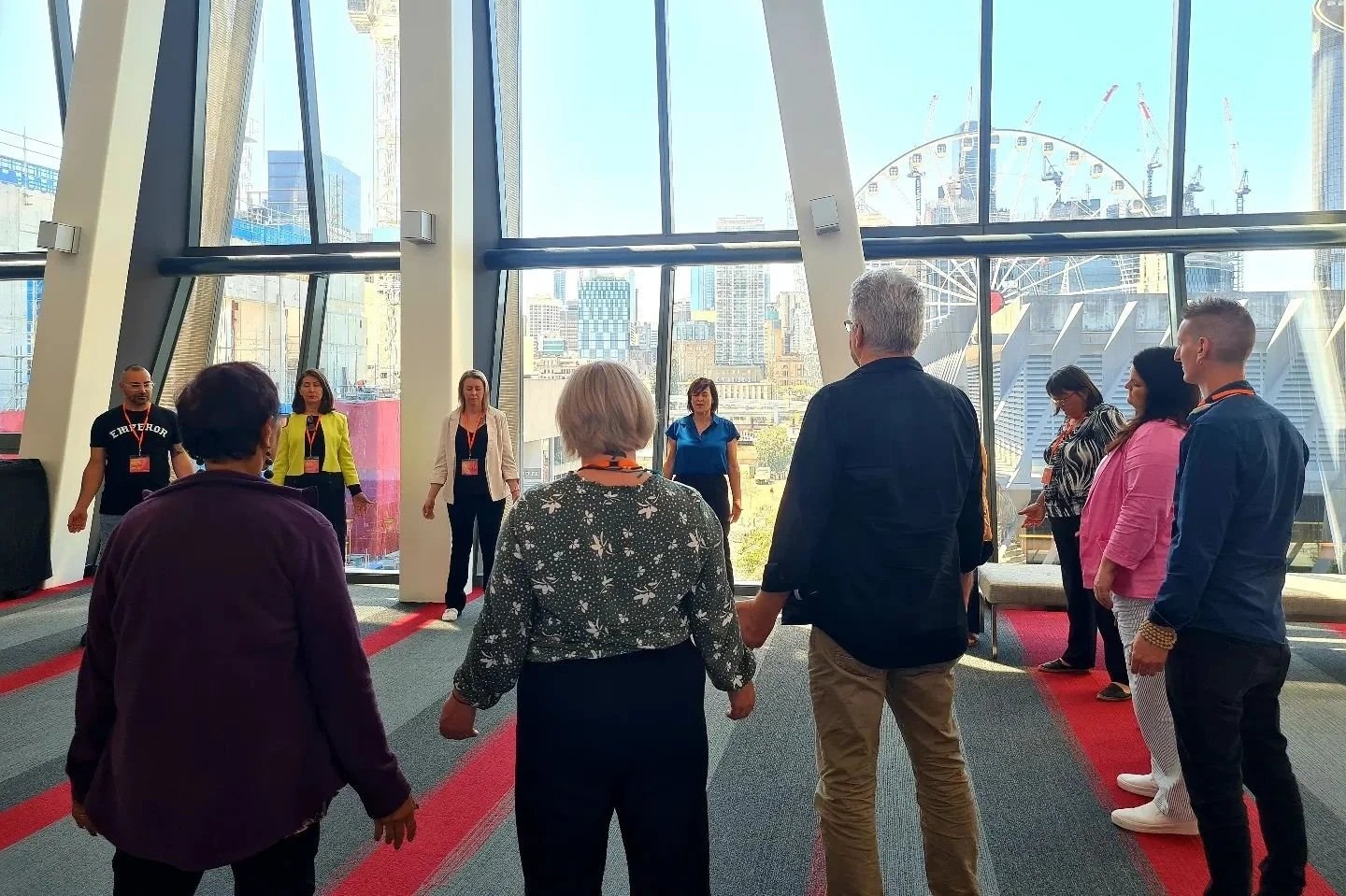
Integrate practices into the workday that are accessible to everybody
The Nervous System Reset
Here's what makes nervous system practices different from other wellbeing initiatives:
They happen during work, not around it
A 90-second breathing practice before a difficult conversation.
A 1- minute check in before a meeting
A 15-minute movement reset when afternoon energy crashes.
A moment of guided rest that actually lets people recalibrate.
They're accessible to everyone
No athletic ability required. No flexibility needed. No special clothes or equipment. You can do them in a boardroom, at a desk, even in a video call.
They work immediately
Unlike therapy or fitness programs that require weeks to show results, nervous system regulation works in real-time. Three deep breaths can shift you from reactive to responsive. Instantly.
They're backed by neuroscience
This isn't woo-woo. It's biology. Practices like breathwork, movement, and mindfulness activate the parasympathetic nervous system: your body's natural "rest and digest" mode.
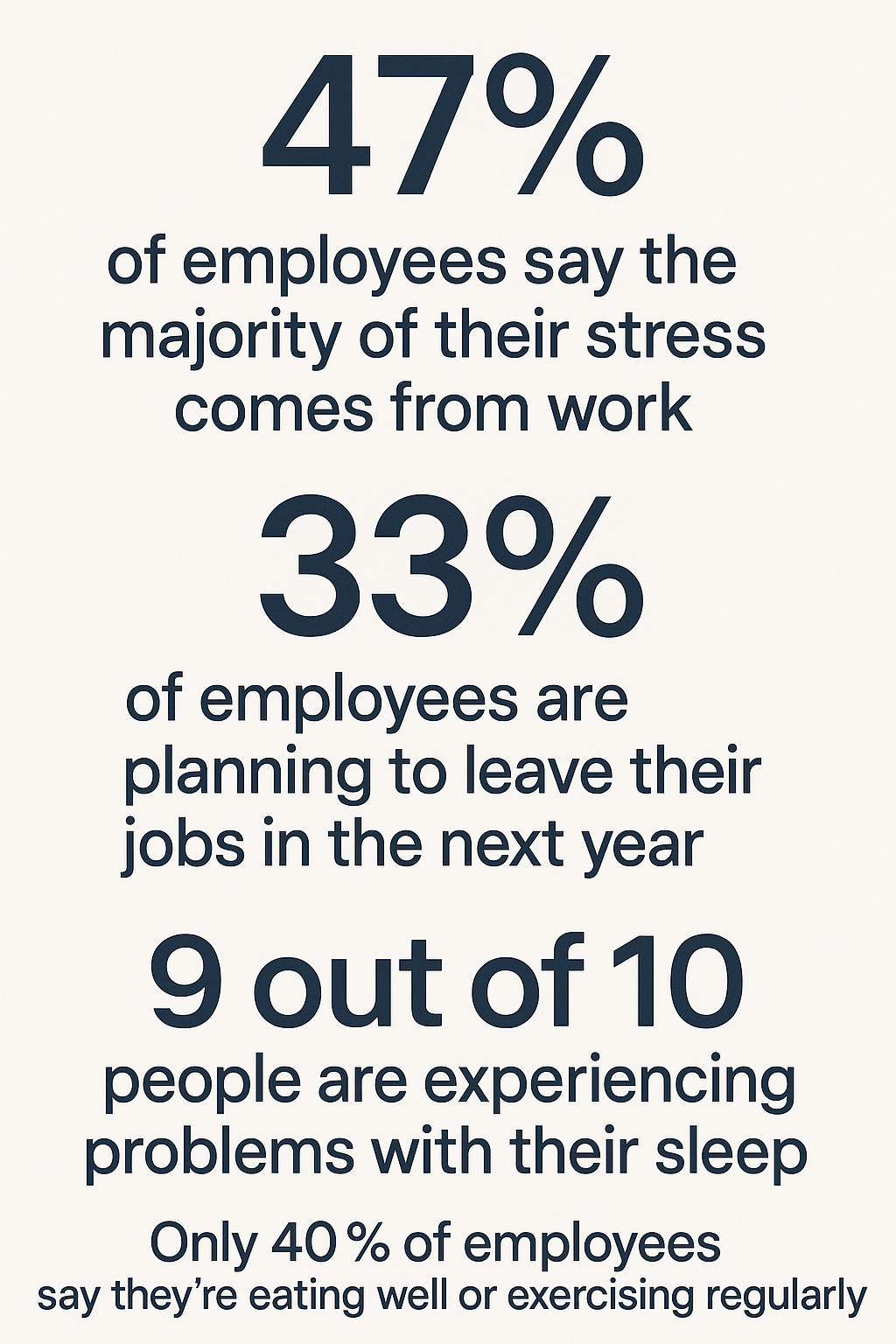
And here's the cost:
Replacing an employee costs between 50-200% of their annual salary.
If you can keep even one person from leaving, they've paid for themselves ten times over.
But the benefits go beyond retention:
✓ Reduced sick leave - Teams managing stress effectively take fewer stress-related sick days
✓ Improved focus and productivity - Calm nervous systems make better decisions
✓ Stronger team dynamics - Regulated people communicate more effectively
✓ Enhanced psychological safety - When people feel calm, they feel safe to contribute
How to Introduce without Resistance
I know what you're thinking: "My team will never go for this."
"We're too busy."
"This isn't for people like us."
"I'm not flexible enough."
I don't want to sit cross-legged and chant."
Here's the truth: resistance isn't the problem. How you frame it is.
First: Take time to listen, what do your people need and want? Get their buy in from the outset
Start Small and Make It Easy
Don't launch with hour-long sessions three times a week. Start with:
→ A 15-minute "Afternoon Reset" once a week
Short enough that nobody feels they're losing productivity. Long enough to experience genuine benefit.
→ During work hours (not before/after)
The best uptake happens mid morning, lunchtime, or mid afternoon. When you ask people to come early or stay late, you're already adding friction.
→ In a familiar space
Conference room, break room, even at desks. Don't make people travel or change clothes.
Get Leadership Visibly Involved
When your CEO, directors, or senior managers participate, it sends a clear message: This isn't frivolous. This is strategic. Leadership presence gives everyone else permission to prioritize wellbeing.
Create a Wellbeing Champion (Not a Program Police)
Find someone passionate about wellbeing who can keep momentum going. But make sure they're inviting, not pressuring.
The goal is to create a culture where wellbeing feels like support, not obligation.
The Real ROI: What Happens When You Get This Right
We've worked with organizations where, after consistent nervous system practices:
✓ Sick days dropped 30% (one team went from averaging 2 sick days per month to less than 1)
✓ Engagement scores improved (measured in annual employee surveys)
✓ Retention increased (particularly among high performers who were at risk of leaving)
✓ Team communication strengthened (managers reported fewer conflicts, more collaboration)
✓ Energy became sustainable (instead of boom-bust cycles, teams maintained steadier focus)
But here's what doesn't show up in data:
The manager who finally sleeps through the night.
The team member who stops snapping at colleagues.
The executive who realizes they've been holding their breath for three years.
That's the transformation that keeps people talking. That's what turns skeptics into advocates.
Consider the name, ie. if you’re introducing yoga maybe you need to call it something else!
Instead, introduce it as:
Stress management tools
Performance optimization
Nervous system regulation
Energy management
Team resilience building
Once people experience the benefits, they stop caring what it's called.
Your Implementation Roadmap
Phase 1: Build Your Case (Week 1-2)
Gather data on your current challenges:
What are your retention rates?
How many stress related sick days are you seeing?
What's your employee engagement score?
What feedback are you getting about workload and stress?
Identify your internal champions:
Which leaders would model participation?
Who in your organization is already passionate about wellbeing?
Which teams are most in need of support?
Calculate potential ROI:
Cost of replacing one employee
Cost of sick leave
Cost of disengagement
Compare to cost of weekly wellbeing sessions
Phase 2: Run a Pilot Program (Month 2-3)
Start with one willing team or department:
Commit to 8-12 weeks (research shows it takes 8 weeks to form a habit)
Offer 15-30 minute sessions weekly
Schedule during work hours
Make attendance optional but encouraged
Choose the right facilitator: This is critical. You need someone who:
Understands workplace culture (not just yoga studios)
Can adapt for all levels and abilities
Makes practices accessible and practical
Doesn't use language that alienates ("just breathe and let go" doesn't land for most corporate teams)
Measure and document:
Track attendance
Gather feedback (formally and informally)
Note any changes in team dynamics, energy, or engagement
Collect testimonials
Phase 3: Scale and Sustain (Month 4+)
Share your pilot results:
Present data to leadership
Share participant testimonials
Make the business case clear
Expand strategically:
Add more teams gradually
Offer different formats (in person, virtual, recorded practices)
Create variety (movement, breathwork, meditation, guided rest)
Build it into culture:
Include in onboarding for new employees
Feature in internal communications
Celebrate participation without pressuring
Keep evolving based on feedback
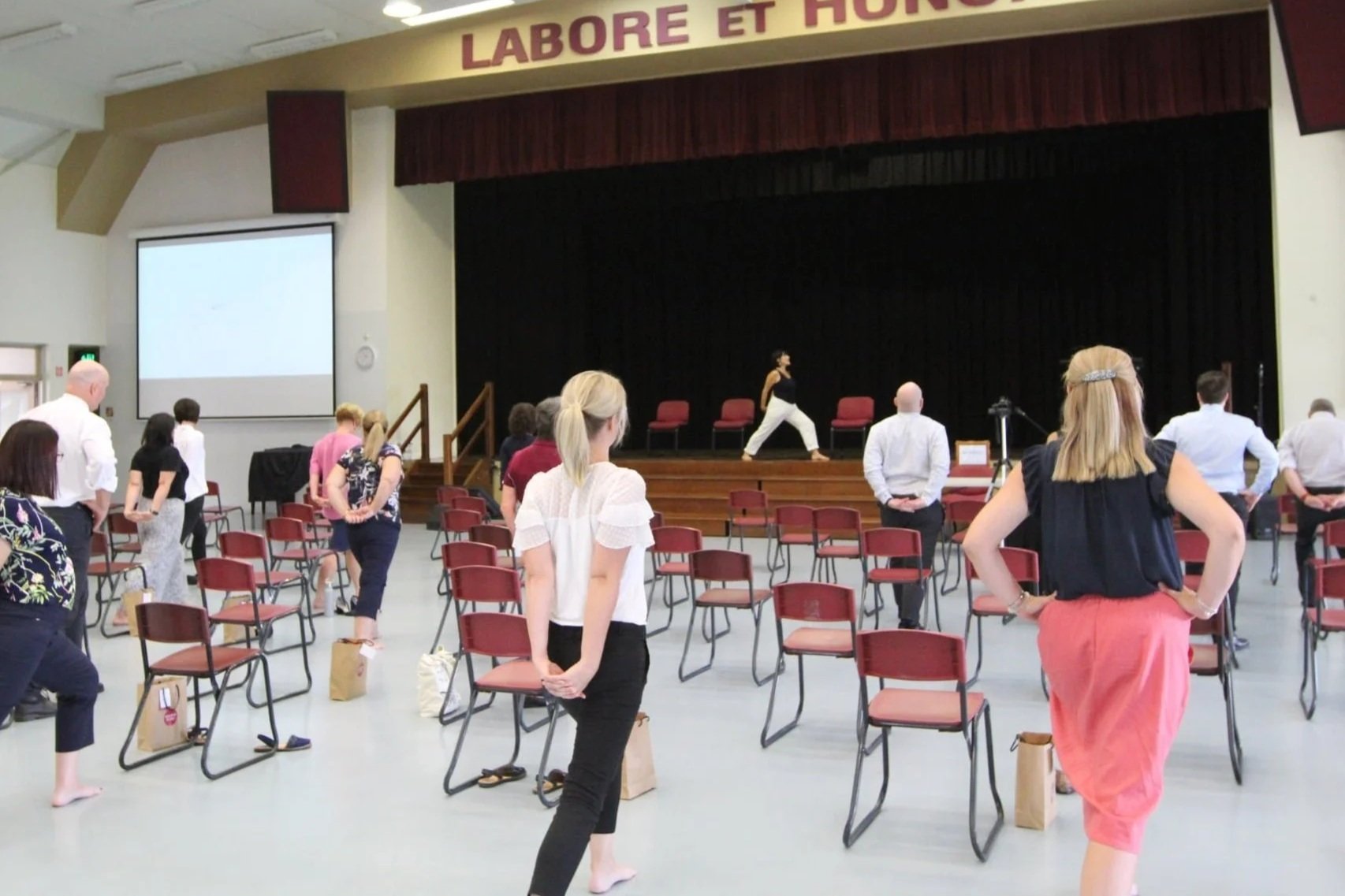
Teaching teachers to equip them with wellbeing skills at the beginning of a new academic year
The Multi-Layered Approach: Creating Sustainable Wellbeing
Rather than relying on one program format, the most successful organisations create a wellbeing ecosystem with multiple access points, eg:
Layer 1: Workplace-Specific Stress Relief Tools
Layer 2: Micro-Wellbeing Video Library
Layer 3: Online Wellbeing Program (The Accessibility Solution)
Layer 4: Audio Meditation Library
Layer 5: Lunch and Learn Sessions
Layer 6: Train-the-Trainer Program
The Budget Question
Option 1: Fully Funded by Organization
Company covers 100%: positions wellbeing as a core value, not a perk
Option 2: Co-Payment Model
Company subsidizes 50-75%, employees contribute the rest: increases commitment while managing costs
Option 3: Wellbeing Budget Allocation
Employees can use existing wellbeing budgets: gives choice and autonomy
Option 4: Trade Off Approach
Redirect budget from unused gym memberships or under utilized programs
The ROI math:
If you pay $150 for weekly workplace sessions, that's roughly $7,800/year.
Replacing one employee? $50,000-$150,000.
If workplace wellbeing practices keep even one person from leaving, you've saved 6-20x your investment.
Not to mention:
Reduced sick leave costs
Improved productivity
Better team dynamics
Enhanced reputation as an employer of choice

After 12 years in this space, here's what we've learned that most providers miss:
What Makes Corporate Yoga Australia Different
After 12 years in this space, here's what we've learned that most providers miss:
We Understand Workplace Skepticism
We've converted the resistant Board member, the "too busy" executive, the "this isn't for me" team. We know how to meet skepticism with curiosity, not judgment.
We Speak Business, Not Just Yoga
We understand your KPIs, your retention challenges, your budget pressures. We're not just teaching poses—we're helping you solve organizational problems.
We Blend Ancient Wisdom with Neuroscience
Our approach combines the time-tested practices of yoga and meditation with modern understanding of nervous system regulation.
We Customise for Your Culture
A law firm needs something different than a tech startup.
A frontline team needs different support than executives. A warehouse team or group of teachers need something entirely different. We adapt.
We Train You to Sustain It
Our goal isn't to make you dependent on us. It's to give your team tools they can use independently, so wellbeing becomes self sustaining.
We work with the 5 Pillars of Wellbeing
The most effective workplace programs address all five pillars of wellbeing:
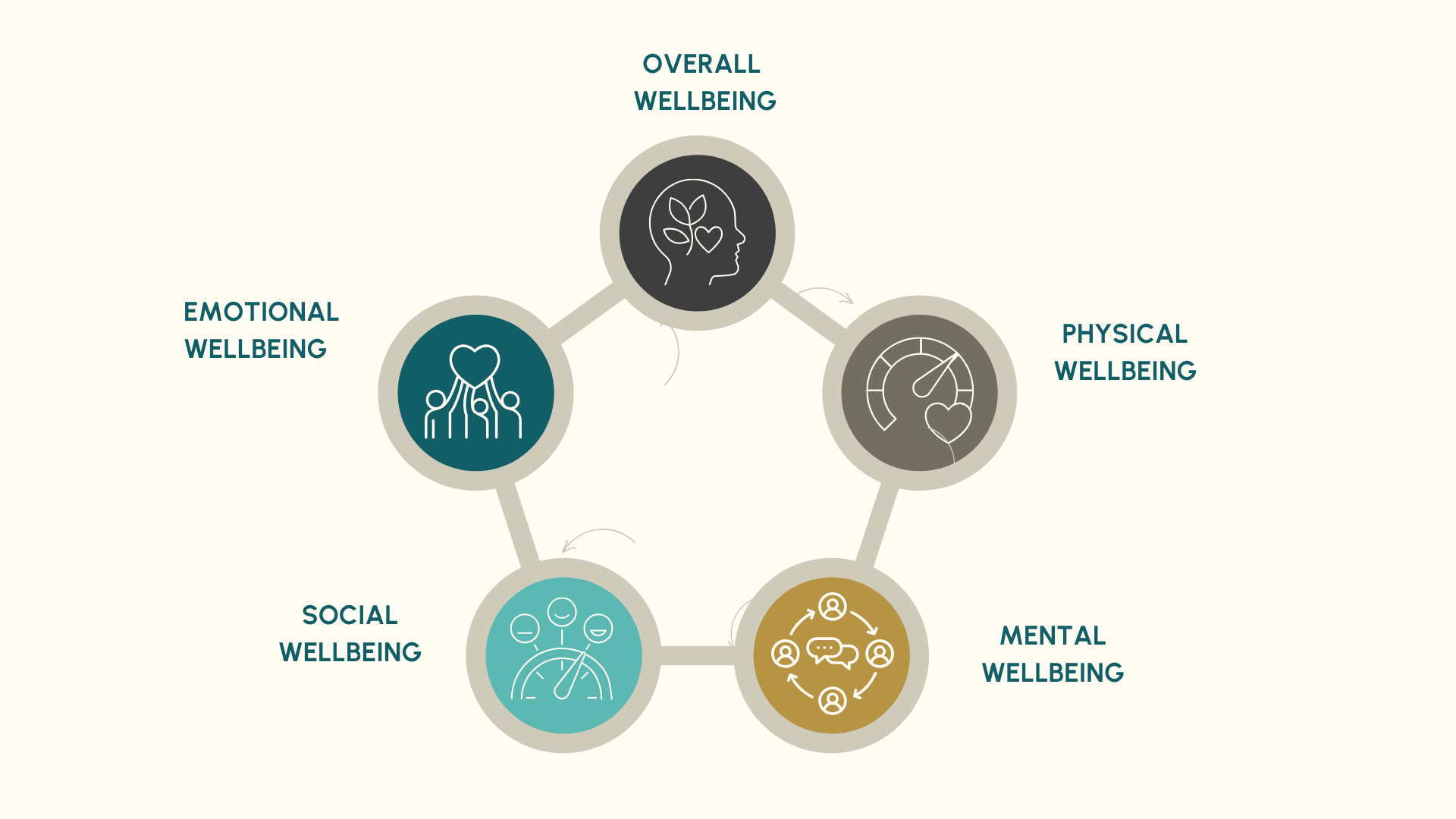
Wellbeing isn't one-dimensional and what works for Jan in Accounts doesn’t work for Jim in the Warehouse
The most effective workplace programs address all five pillars of wellbeing:
1. Physical Wellbeing
Movement, nutrition, sleep, energy management
2. Mental Wellbeing
Cognitive health, stress management, focus, clarity
3. Emotional Wellbeing
Emotional regulation, resilience, self-awareness
4. Social Wellbeing
Connection, belonging, relationships, community
5. Overall Wellbeing
Money stress,, menopause, sleep, nutirtion and other topics that keep people anxious and awake at night.
Common Objections (And How to Address Them)
"We're too busy for this."
That's like saying you're too dirty to shower. When teams are most stressed is precisely when they need nervous system regulation most.
You're not asking people to add time to their day. You're asking them to spend 15 minutes differently, in a way that makes the other 7 hours and 45 minutes more effective.
"Our team isn't into yoga."
Neither were those three Board members. Until they experienced it.
Don't lead with "yoga." Lead with outcomes: reduced stress, better focus, increased energy, improved team dynamics. Once people feel the benefits, labels don't matter.
"We tried wellness programs before and nobody came."
That's because most wellness programs require extra effort when people are already depleted.
This is different. It happens during the workday. In familiar spaces. With no barrier to entry.
"We don’t have the budget"
Compared to what? The cost of turnover? Recruitment? Lost productivity? Sick leave?
The real question isn't "Can we afford this?" It's "Can we afford not to?"
"How do I convince leadership?"
With data, testimonials, and a pilot program.
Start small. Measure results. Let the outcomes speak for themselves.
Why This Matters Now
We're heading into the most stressful time of year for Australian workplaces.
The Indicators of a Thriving Workplace 2024 shows that December is when:
Psychological distress peaks (57.1% of workers experiencing moderate or severe distress)
Burnout rates hit their highest (nearly 1 in 2 workers)
Retention becomes most fragile (people make decisions about leaving over the holidays)
But here's the opportunity:
Organizations that invest in accessible, integrated wellbeing NOW—in November—set their teams up to finish the year strong, not just survive it.
And those same practices carry into January, when everyone else is recovering from burnout and you're hitting the ground running.
This isn't about adding more to already full plates.
It's about giving people tools to manage what's already on them.
Tools that work in 2 minutes.
Tools they can use at their desk.
Tools that don't require special clothes, equipment, or permission.
Just accessible, practical nervous system support. Right when they need it most.
The Bottom Line
Employee wellbeing isn't a perk anymore. It's the competitive advantage that keeps your people from walking out the door.
The question isn't whether to invest in wellbeing. It's whether to invest in approaches that actually work.
And here's what works:
Meet people where they are.
In the moments that matter.
With tools they can use right now.
Because your people can't wait until they've "earned" rest. And your organization can't afford to wait until the retention crisis forces your hand.
Ready to Transform Your Workplace Wellbeing Strategy?
Choose your next step:
1. Book a Discovery Call
Let's discuss your specific challenges and design a solution that fits your workplace
📞 1300 373 363
📧 info@corporateyoga.com.au
3. Try a Session
Experience it yourself before rolling out to your team. Contact us to find out more
4. Join Our Online Program
Get your team started with Mindful Mondays & Wellness Wednesdays, accessible short weekly live online sessions (receordings available), cost effective and perfect to integreat tinto your team’s accessible nervous system support
[Learn More]

We would love to chat wellbeing with you, conact us for a pressure free consult: 1300 373 363
